
Do you know where to get your care?
Let’s look at different sites of care and their costs…
Do you know where to get your care?
Let’s look at different sites of care and their costs…
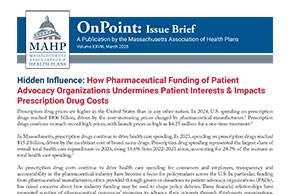
Prescription drug prices are higher in the United States than in any other nation. In 2024, U.S. spending on prescription drugs reached $806 billion, driven by the ever-increasing prices charged by pharmaceutical manufacturers.
Every year, MAHP member plans demonstrate a strong commitment to supporting the communities they serve and improving the quality of life and the health of individuals that live in these communities, with a focus on underserved and vulnerable populations.
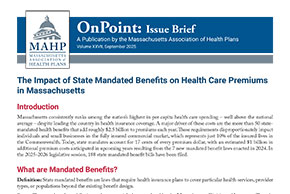
Massachusetts consistently ranks among the nation’s highest in per capita health care spending – well above the national average – despite leading the country in health insurance coverage.
Hear what SCO and One Care members have to say about the programs and the difference they have made in their lives.
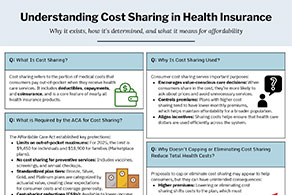
Cost sharing refers to the portion of medical costs that consumers pay out-of-pocket when they receive health care services. It includes deductibles, copayments, and coinsurance, and is a core feature of nearly all health insurance products.
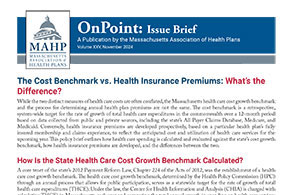
While the two distinct measures of health care costs are often conflated, the Massachusetts health care cost growth benchmark and the process for determining annual health plan premiums are not the same. This policy brief outlines how health care spending is calculated and evaluated against the state’s cost growth benchmark, how health insurance premiums are developed, and the differences between the two.
Every year, MAHP member plans demonstrate a strong commitment to supporting the communities they serve and improving the quality of life and the health of individuals that live in these communities, with a focus on underserved and vulnerable populations.
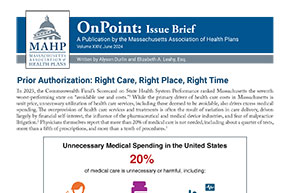
In 2023, the Commonwealth Fund’s Scorecard on State Health System Performance ranked Massachusetts the seventh worst-performing state on “avoidable use and costs.” While the primary driver of health care costs in Massachusetts is unit price, unnecessary utilization of health care services, including those deemed to be avoidable, also drives excess medical spending.
As health care spending continues to rise at both the state and federal levels, employers and consumers find themselves grappling with mounting expenses. This OnPoint provides insight into the regulatory and financial oversight requirements on three key sectors of the health care ecosystem.
Every year, MAHP member plans demonstrate a strong commitment to supporting the communities they serve and improving the quality of life and the health of individuals that live in these communities, with a focus on underserved and vulnerable populations.